Plan the length as it will hang
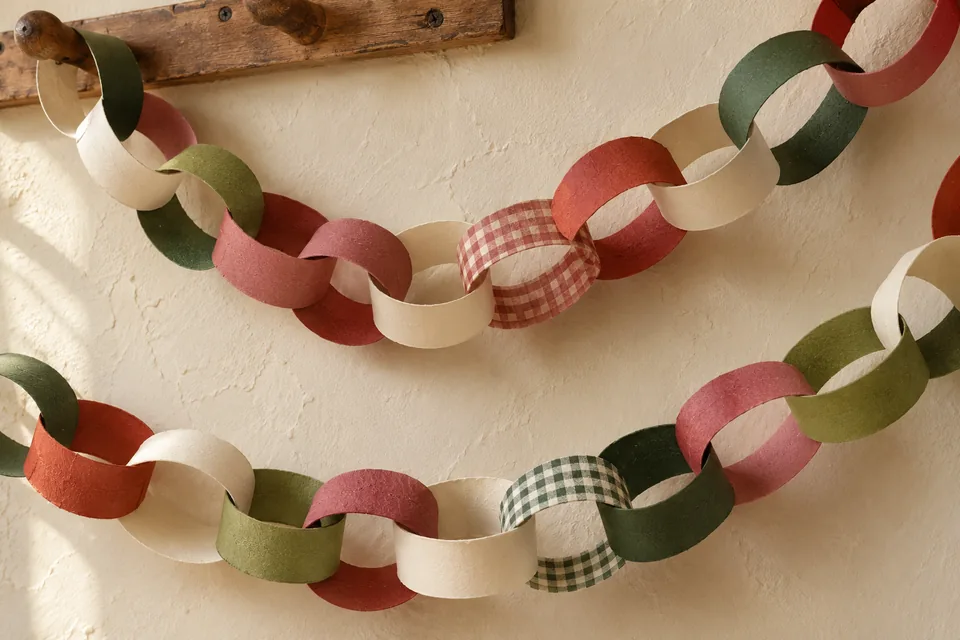
Hold a piece of string where the garland will go. Give it the amount of sag you want and mark the points where it meets the hooks. Measure the string along its length. For several drapes, measure and record each one separately.
Use a sample to count the links
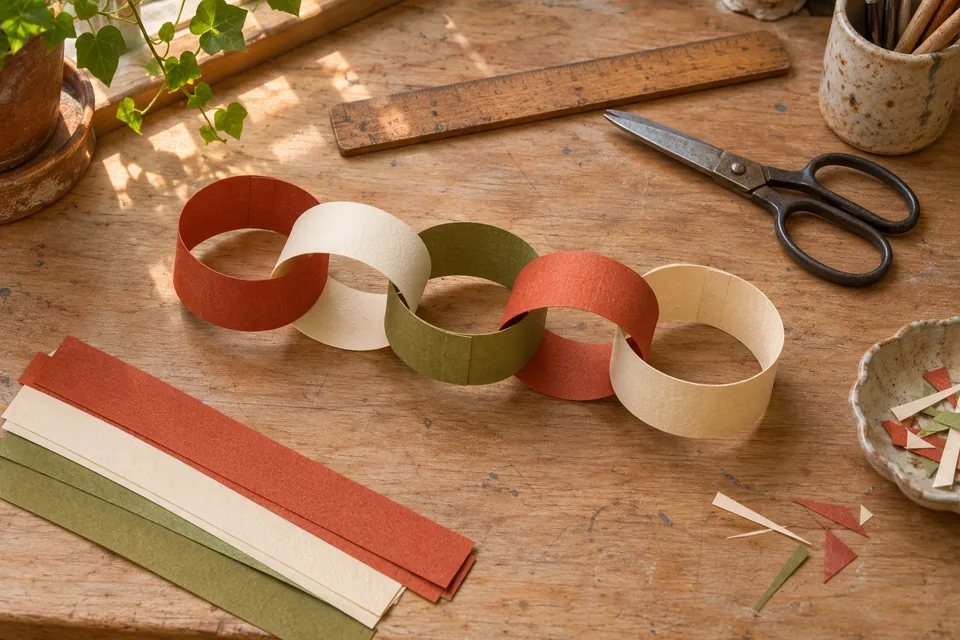
Make ten links with the same strip size, overlap and paper you plan to use. Lay them in a line without pulling the loops tight. Measure the entire ten-link section. Divide the desired length by that measurement and multiply by ten. Round up so you have a whole link.
For example, a ten-link sample measuring 20 inches gives 60 links for a 10-foot swag. If yours measures 16 inches, the same garland needs about 75 links. These are examples to show how paper and tension change the count.
Start with these three worked examples
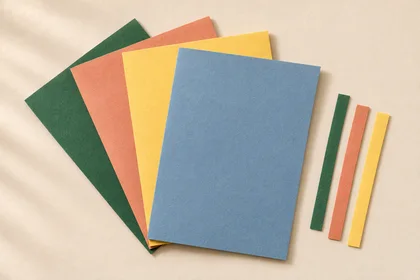
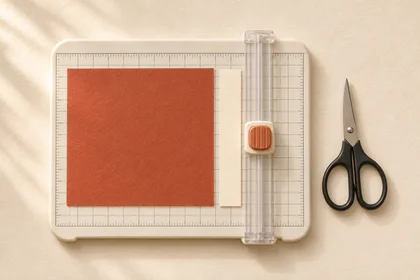
These figures assume a ten-link sample of 20 inches, strips 1 × 8 inches, and US Letter paper. Cutting strips with their long side across the short sheet edge yields 11 per sheet. The totals below add 10 percent extra strips and round up to whole sheets for a single color.
| Drape | Links | Strips to cut | Sheets |
|---|---|---|---|
| 6 ft | 36 | 40 | 4 |
| 10 ft | 60 | 66 | 6 |
| 15 ft | 90 | 99 | 9 |
Round up each color separately
If you need 33 red strips and 33 green strips and a sheet yields 11, buy three sheets of each. If you change the pattern to two red loops for every green loop, distribute the counts again before rounding. Spare capacity from a red sheet cannot be used for green strips.
For gift wrap or a small scrap pile, count usable strips by measuring the flat part of the paper. Mark irregular edges and creases before you count your yield.