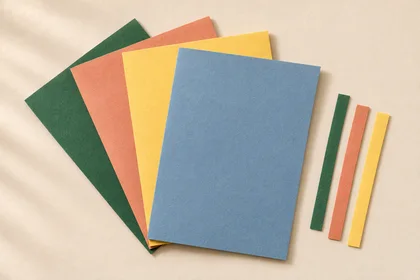
Download the free STEM worksheet
One black-and-white page with a prediction, a two-round results table, and reflection questions.

Set up a fair test
For each round, give each team one sheet of the same size and thickness, a ruler, scissors, and the same length of tape. Agree on a strip length, overlap, and working time. Keep those the same across rounds. Use a fresh sheet for round two.
Predict, build, and measure
Ask teams to predict which strip width will give them the longest chain. Cut uniform strips, join them into links, then lay the finished chain straight on a table or the floor. Measure from end to end without stretching the loops. Record the width, link count, and finished length with its unit.
Change the strip width and try again
In round two, change the strip width. Use the same strip length, overlap, paper, time, and tape allowance. Compare the finished lengths and link counts. Ask what changed and whether narrow strips tore or twisted enough to affect the result.
Compare the math to the real chain
Before cutting, use the garland calculator to estimate how many strips fit on one sheet. To compare how different chains hang, measure ten finished links from each round and divide by ten to find the average length per link.
For a shorter lesson, have students choose between two widths and run one trial per group. Pool the results for a class comparison.